How to Generate GST Invoice: The Ultimate 2026 Compliance Guide for Small Businesses
By Smart Bill Book Team • June 13, 2026
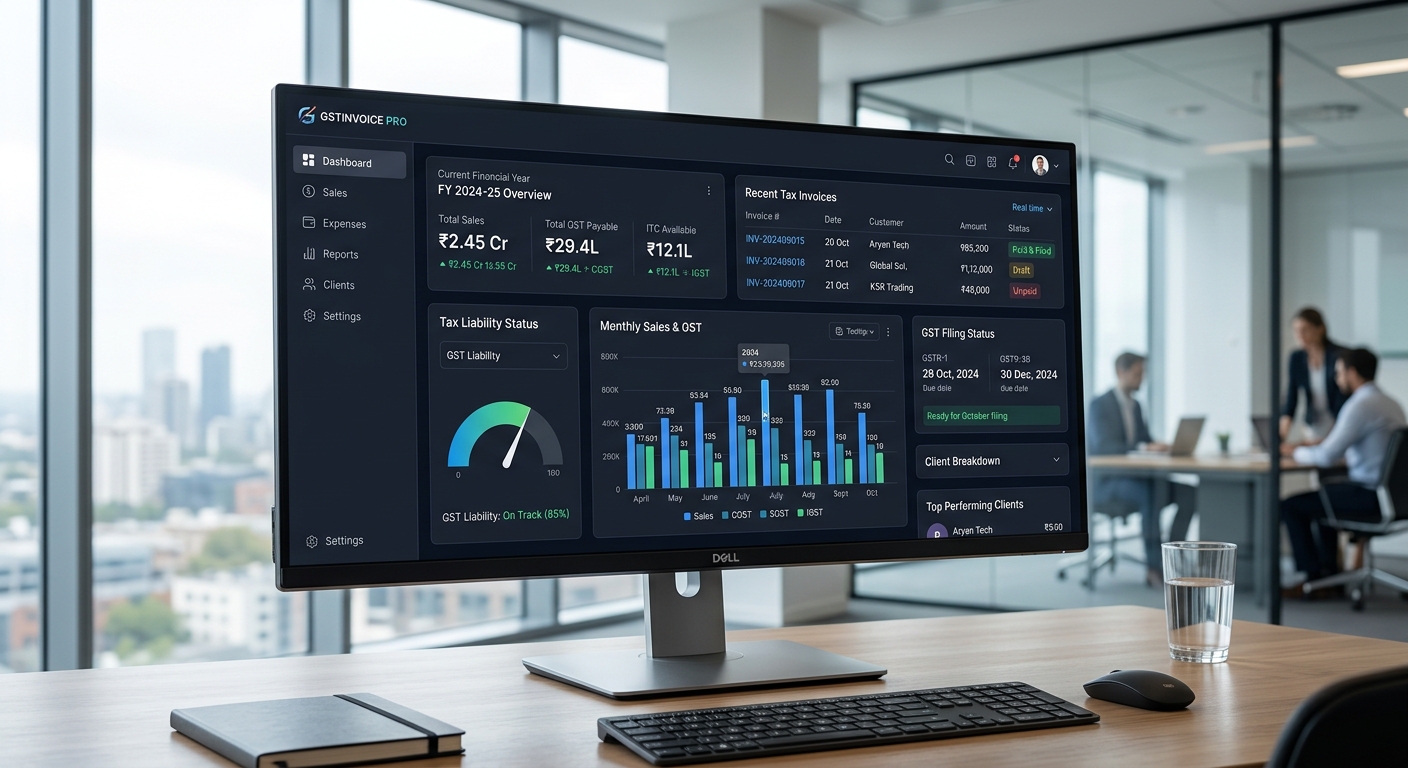
The Evolving World of GST Invoicing in 2026
Is your business truly secure in the age of GST 2.0, or is a single invoicing error quietly throttling your growth? The landscape of indirect taxation in India has shifted seismically as we navigate 2026. What was once a system of manual filings and periodic checks has evolved into a high-tech, real-time ecosystem. For small and medium enterprises (MSMEs), understanding how to generate a GST invoice is no longer a mere clerical task; it is a core strategic function that safeguards your financial health and grants you the freedom to scale without regulatory friction.
The scale of this new ecosystem is staggering. In April 2026, gross GST revenue reached an all-time record of ₹2.43 lakh crore. For the full fiscal year 2025-2026, total collections hit ₹22.27 lakh crore—a robust 8.3% year-on-year growth. This surge isn't just a byproduct of economic expansion; it is the direct result of enhanced compliance and the integration of AI-driven audit systems. For a deeper look at the broader compliance landscape, check out our complete GST filing guide for 2026.
Tax authorities have retired the era of random manual inspections. Today, sophisticated AI algorithms scan millions of invoices in real-time to detect discrepancies in Input Tax Credit (ITC), HSN code mismatches, and reporting delays. In this high-stakes environment, one error can trigger automated notices, block E-Way bills, or suspend your GSTIN. For MSMEs, mastering GST-compliant invoicing is the first vital step toward long-term sustainability and market leadership.
What is a GST Invoice and Why Does It Matter?
At its surface, a GST invoice is a legal document itemizing goods or services and their applicable taxes. However, in the 2026 framework, its significance runs deeper. It acts as your primary "Proof of Supply" and the exclusive gateway to unlocking your Input Tax Credit (ITC).
For a buyer, a compliant GST invoice is the only ticket to reclaiming the tax paid on purchases. If you issue a non-compliant invoice or fail to upload it correctly, your customer loses the ability to offset that tax. This "ITC leakage" is a silent killer; research shows that manual reconciliation errors cause MSMEs to lose between 10% and 15% of their eligible ITC every year.
Beyond tax credits, a valid GST invoice ensures the security of your supply chain. It is a legal prerequisite for transporting goods worth over ₹50,000 (via the E-Way bill system) and for engaging in international trade. Banks and fintech lenders now use these invoices to verify business credibility. As industry experts note, "Real-time compliance scorecards and priority lending are the new levers to unlock MSME competitiveness."
Mandatory Fields for a 2026-Compliant GST Invoice
Security begins with accuracy. Under 2026 regulations, your invoices must contain specific fields to be considered "valid." Missing even a single detail can render the document void for ITC purposes and invite unnecessary penalties. To ensure your invoices are visually and legally perfect, refer to our guide on the standard GST bill format.
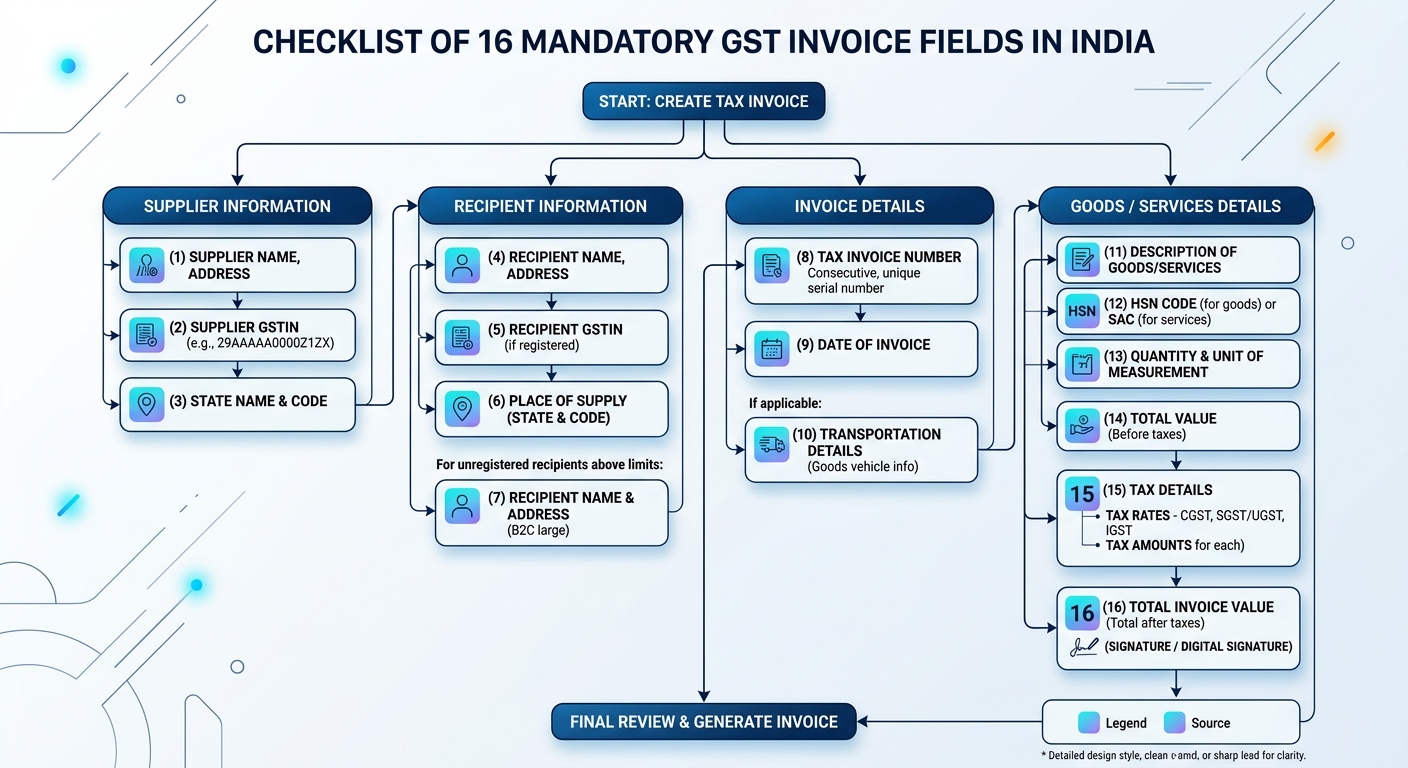
- Invoice Number and Date: A consecutive serial number (alphabets, numerals, or hyphens/slashes) unique to the financial year.
- Supplier Details: The legal name, registered address, and GSTIN of the seller.
- Recipient Details: Name, address, and GSTIN of the buyer (for B2B). For B2C transactions over ₹50,000, the recipient's name, address, and delivery location are mandatory.
- HSN/SAC Codes: As of 2026, 6-digit HSN codes for goods and SAC for services are mandatory for nearly all businesses.
- Description of Goods/Services: A clear, professional breakdown of the supply.
- Quantity and Unit: Accurate counts and units of measurement (e.g., Kg, Pcs, Meters).
- Total Value: The gross value of the supply before tax.
- Taxable Value: The final value after applying discounts or abatements.
- Tax Rates and Amount: A precise split between CGST and SGST (intra-state) or IGST (inter-state).
- Place of Supply: The critical data point for determining the tax type.
- Delivery Address: Required if different from the place of supply.
- Reverse Charge Basis: Clearly state if tax is payable on a reverse charge basis.
- Signature: A physical signature or a validated digital signature of an authorized representative.
Step-by-Step Guide on How to Generate a GST Invoice
While the requirements are strict, you can master the process in five manageable steps.
Step 1: Empower Your Business with the Right Billing Software
Manual invoicing via Excel is a recipe for disaster in 2026. The complexity of HSN lookups and digital signatures demands dedicated GST billing software. Choose tools that offer cloud synchronization and mobile access to ensure you can manage your business from anywhere.
Step 2: Authenticate Business and Customer Details
Maintain an updated profile with your 15-digit GSTIN. When creating an invoice, select the customer from your database. Professional software automatically verifies the customer’s GSTIN against the portal, preventing you from billing a cancelled or suspended account.
Step 3: Itemize with 6-Digit HSN Accuracy
Add your products or services. In 2026, you cannot afford to guess HSN codes. Use software with a built-in HSN finder to ensure accuracy, as AI systems now flag HSN-Tax Rate mismatches almost instantly.
Step 4: Execute Tax Calculations Precisely
Your software should automatically determine the tax type based on the "Place of Supply."
- Intra-state: Apply CGST + SGST if the supplier and recipient are in the same state.
- Inter-state: Apply IGST if they are in different states.
Ensure tax rates (0% to 28%) apply only to the taxable value after trade discounts.
Step 5: Verify, Issue, and Secure
Perform a final "sanity check" on the sequence and date. Once verified, issue the invoice via email or WhatsApp. If you meet e-invoicing mandates, your software will generate the Invoice Reference Number (IRN) and QR code at this stage. For a practical walkthrough, see our tutorial on how to create a sales invoice in Smart Bill Book.
E-Invoicing: Who Needs It and How to Comply
E-invoicing is the cornerstone of GST 2.0. It isn't just about digital files; it's a system where the GST Network (GSTN) authenticates B2B invoices before they reach the customer.
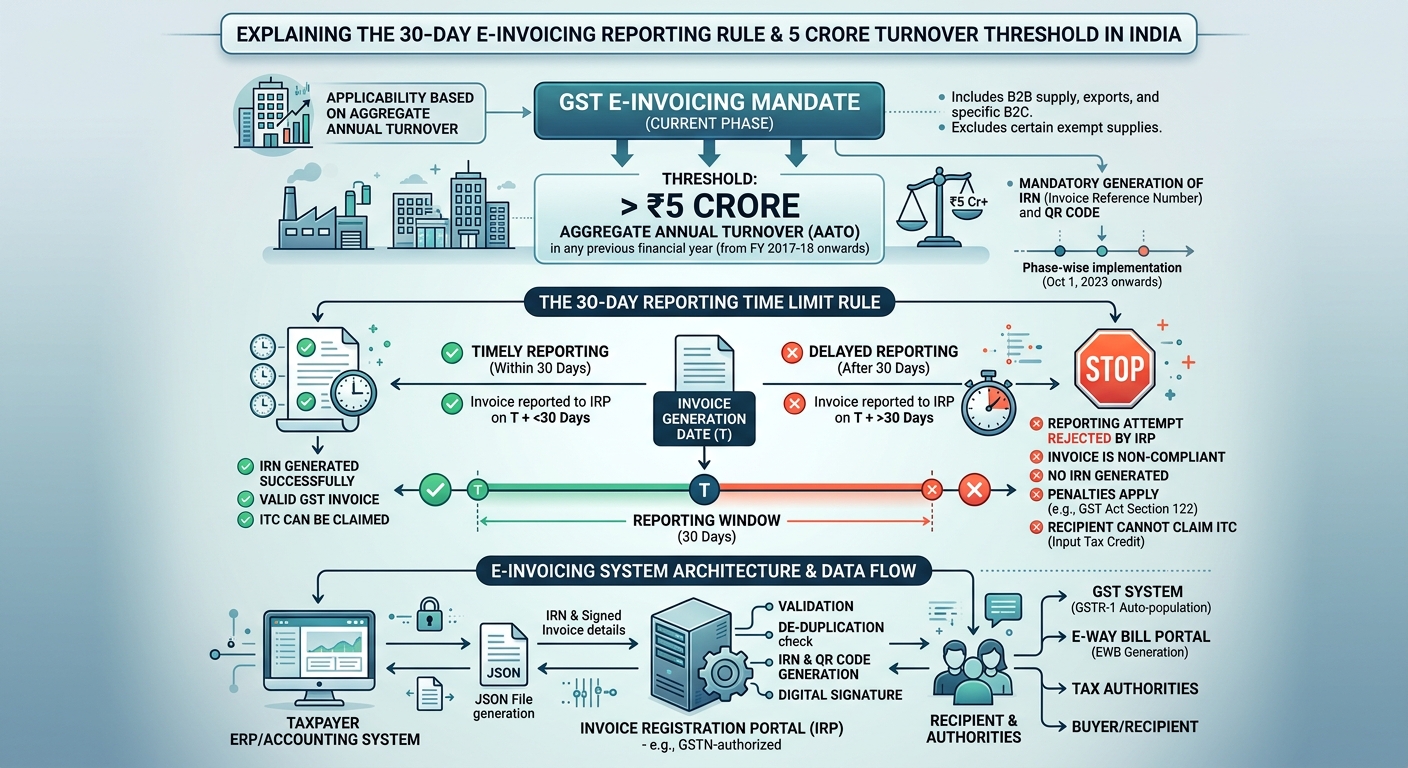
The ₹5 Crore Threshold
As of 2026, e-invoicing is mandatory for any business with an Aggregate Annual Turnover (AATO) exceeding ₹5 crore in any financial year since 2017-18. If you fall into this category, an invoice without a government-authenticated QR code is legally "invalid."
The 30-Day Reporting Rule
For businesses with a turnover exceeding ₹10 crore, the clock is ticking. You must report invoices to the Invoice Registration Portal (IRP) within 30 days of the invoice date. An invoice dated March 1st reported on April 5th will be rejected, rendering it invalid and stripping your buyer of their ITC. This rule ensures transparency and prevents the manipulation of tax liabilities.
The Automated IRN Process
When you generate an e-invoice, your software handles the heavy lifting:
- It transmits invoice data (JSON) to the IRP.
- The IRP validates the data and generates a unique 64-character IRN.
- The IRP signs the invoice and attaches a QR code.
- Data automatically flows to your GSTR-1 and the E-Way bill portal.
Common GST Invoicing Mistakes and How to Avoid Them
Even seasoned entrepreneurs can fall into traps. Awareness is your best defense against penalties.
1. HSN Code Discrepancies
The 6-digit HSN is the new standard. Using outdated 4-digit codes triggers "mismatch" notices. Authorities now use automation to flag these errors within months of filing.
2. Place of Supply Errors
Applying the wrong tax (CGST/SGST vs. IGST) leads to "incorrectly paid" tax. You will likely have to pay the correct tax again and wait months for a refund, severely squeezing your cash flow.
3. Procrastination in Reporting
With the 30-day rule in effect for larger MSMEs, delays are expensive. Missing the reporting window means your customer loses their ITC, which often leads to payment delays or lost partnerships.
4. Bank Account Verification
Effective January 2026, bank account validation is mandatory. If your details aren't verified, your GSTIN can be suspended, halting your ability to issue invoices or file returns.
5. The Risk of Manual Reconciliation
Relying on Excel is high-risk. In the era of the Invoice Management System (IMS), you must actively "Accept" or "Reject" invoices. Automation is the only way to ensure 100% ITC accuracy and protect your bottom line.
The Role of Automation in GST Compliance
GST 2.0 demands that compliance be integrated into every transaction, not left for the end of the month. This is where automation tools like Smart Bill Book become a catalyst for growth.
Automation delivers three primary advantages:
- Real-Time Reconciliation: Sync with the GST portal daily to flag missing invoices or mismatches instantly.
- One-Click E-Invoicing: Generate IRNs and E-Way bills directly from your billing interface, eliminating manual entry errors.
- Massive ROI: Full e-invoicing adoption can save businesses over ₹1 crore annually by eliminating productivity drains and ITC leakage.
Conclusion: Staying Ahead in the GST 2.0 Era
In 2026, GST compliance has transformed from a regulatory burden into a growth lever. A business that generates clean, compliant invoices enjoys stronger customer relationships, faster credit access, and a reputation for reliability.
The era of manual workarounds is over. With record-breaking revenues and AI-driven enforcement, the government has prioritized transparency. By adopting the right tools and staying ahead of the 30-day reporting window, you ensure your business remains secure and prosperous.
Automation is no longer optional—it is the engine of MSME survival. Don't leave your hard-earned Input Tax Credit on the table. Take control of your GST invoicing today and build a foundation for a compliant, high-growth future.
Frequently Asked Questions
- Is e-invoicing mandatory for small businesses in 2026?
Yes, if your turnover (AATO) has crossed ₹5 crore in any year since 2017-18, e-invoicing is mandatory for all B2B transactions. - What happens if I report an invoice after 30 days?
For businesses above ₹10 crore turnover, late reports are rejected by the IRP, making the invoice invalid for ITC. - What is the penalty for a non-compliant GST invoice?
Penalties can reach ₹10,000 or the tax amount involved, whichever is higher, and may lead to GSTIN suspension. - Can I claim ITC if my supplier hasn't uploaded the invoice?
No. Under 2026 rules, ITC is only available if the invoice is reflected in your GSTR-2B.
Download Smart Bill Book for Windows or Android to automate your GST 2.0 compliance today.
Start Billing Smarter Today 🚀
Join over 1 Lakh businesses using the best billing app in the market.