October 2026 ITC Deadline: Last Chance to Recover Lost Input Tax Credit
By Smart Bill Book Team • June 11, 2026

The October 2026 GST ITC Deadline: Why Your Business Could Lose Lakhs This Year
For every small business owner in India, the clock is ticking. As we approach late 2026, a critical regulatory window is about to slam shut. If you are a GST-registered taxpayer, there is one date you must circle in red on your calendar: November 30, 2026. This is the official GST ITC deadline 2026 for Financial Year 2025-26, and missing it could be the most expensive mistake your business makes this year.
This isn't just another routine filing date. It is the final, non-negotiable cutoff to claim your Input Tax Credit (ITC) for the entire ITC FY 2025-26 period. Under the strict provisions of Section 16(4) of the CGST Act, once this date passes, any unclaimed tax credit from the previous year is gone forever. We aren't talking about small change - for the average Indian MSME, this could represent a loss of ₹3 lakhs to ₹8 lakhs in legitimate tax savings. For a more detailed look at general compliance, check out our complete GST filing guide for small retailers in 2026.
The stakes have never been higher. In 2026, the Indian MSME sector is grappling with an estimated ₹30 lakh crore credit gap. Much of this gap isn't due to a lack of revenue, but rather a lack of efficient tax management. Billions of rupees are currently locked in unrefunded or unclaimed ITC, effectively acting as an interest-free loan from small businesses to the government. At Smart Bill Book, we've seen first-hand how "data chaos" - missing bills on WhatsApp, mismatched supplier entries, and manual errors - can bleed a healthy business dry.
In this comprehensive guide, we will break down exactly what you need to do to protect your bottom line before the GST ITC deadline 2026 cutoff. We will explore the new "Hard-Block" rules implemented in April 2026, the mandatory Invoice Management System (IMS), and how Smart Bill Book GST features can ensure not a single rupee of your ITC is left on the table.
The Hard Truth: Section 16(4) and the November 30 Cutoff
To understand the urgency, we must look at the law. Section 16(4) of the CGST Act is the "gatekeeper" of Input Tax Credit. It stipulates that a registered person shall not be entitled to take input tax credit in respect of any invoice or debit note after the thirtieth day of November following the end of the financial year to which such invoice or debit note pertains, or the furnishing of the relevant annual return, whichever is earlier.
The "Whichever is Earlier" Trap
Many business owners mistakenly believe they have until December or even the end of the year to sort out their books. This is a dangerous assumption. For FY 2025-26 (April 1, 2025 - March 31, 2026), the deadline is either:
- November 30, 2026: The statutory cutoff.
- The date of filing GSTR-9 (Annual Return): If you file your annual return early - say, on October 15 - that date becomes your final deadline. You cannot claim missed ITC from FY 2025-26 in any return filed after your GSTR-9.
This means if you missed recording a purchase from June 2025, you must find it, reconcile it, and claim it in your GSTR-3B for October 2026 (filed in November) at the very latest. If you miss this window, the GST portal will literally grey out the option to claim that credit. It becomes a permanent cost to your business, directly reducing your net profit. Our GSTR-3B return filing guide offers additional tips on staying compliant throughout the year.
The 2026 "Hard-Block" Crisis: Why Compliance Just Got Tougher
If the GST ITC deadline 2026 itself wasn't enough to worry about, the GST portal's behavior changed significantly on April 1, 2026. For years, the portal provided "warnings" when a taxpayer's ITC claim in GSTR-3B exceeded the data available in GSTR-2B. You could ignore the warning, file your return, and deal with the notice later.
That era is over.
From Warnings to Walls
Under the new "Hard-Block" rule, the portal now enforces a strict mathematical lock. If the GSTR-2B mismatch between your books (GSTR-3B) and your supplier's filings (GSTR-2B) exceeds a narrow, pre-defined margin, the "File Return" button is disabled. You cannot complete your monthly compliance until you either:
- Reduce your ITC claim to match the portal's records.
- Get your suppliers to upload the missing invoices and wait for the next GSTR-2B cycle.
This creates a nightmare scenario for businesses that wait until the last minute. If you discover a missing ₹50,000 credit on November 20, but your supplier doesn't upload the bill until November 25, you might be blocked from filing your October return on time, leading to late fees, interest, and a drop in your GST compliance rating.
The "WhatsApp Leak" & Other Reasons ITC is Lost
Why do these mismatches happen in the first place? In our research, we've identified three major culprits that cause small businesses to lose an average of ₹3-8 lakhs per year. Managing your supplier reliability score is one way to mitigate these risks.

1. The WhatsApp Leak
In the fast-paced Indian retail and wholesale market, many transactions happen over WhatsApp. A supplier sends a photo of a bill, a transport agent sends a screenshot of an e-way bill, or a software vendor emails a PDF link. These "digital scraps" are often viewed, acknowledged, and then lost in the endless scroll of personal chat history. By the time the CA asks for documents on the 10th of the next month, these bills are forgotten. This "WhatsApp Leak" is responsible for nearly 40% of missed ITC claims in the MSME sector.
2. Section 17(5) Confusion: Safe vs. Blocked Credits
Not all GST paid is "claimable." Section 17(5) of the CGST Act lists "Blocked Credits" - items like food and beverages, personal vehicle expenses, and club memberships where you cannot claim ITC even if you have a valid GST invoice. Many businesses accidentally claim these, leading to automated GST notices that average ₹85,000 in penalties. Conversely, some owners are so afraid of notices that they don't claim legitimate credits on things like office furniture or professional services, leaving money on the table.
3. Manual Entry Errors
Typing a 15-digit GSTIN is a recipe for disaster. A single wrong digit means the invoice is mapped to a different business (or nowhere at all), and you never see the credit in your GSTR-2B. Over 1.4 million small sellers on e-commerce platforms are currently struggling with these reconciliation errors, losing thousands every month simply because of "fat-finger" typing mistakes.
How to Perform a 100% Reconciliation Before the Deadline
To ensure you are fully compliant and haven't missed any money before the GST ITC deadline 2026, you need a systematic approach. Follow this checklist:
Step 1: The FY 2025-26 Purchase Audit
Gather every single purchase record from April 1, 2025, to March 31, 2026. This includes physical bills, WhatsApp images, and email attachments. Compare this "Internal Register" with your filed GSTR-3B returns. If you find a bill that was never recorded, now is the time to enter it. You can learn more about automating purchase entries via AI photos to speed up this process.
Step 2: Master the Invoice Management System (IMS)
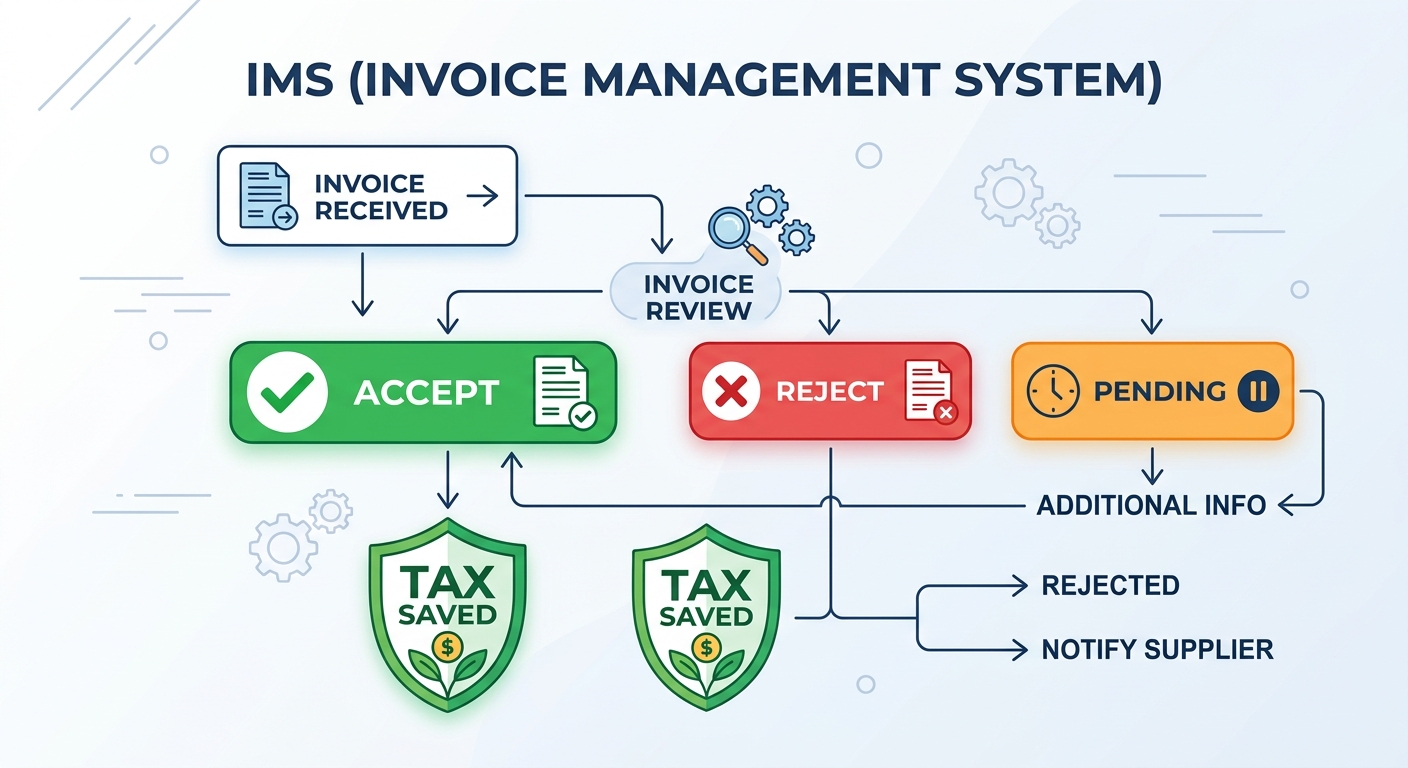
Mandatory since late 2025, the Invoice Management System (IMS) on the GST portal is your most powerful tool. It allows you to take three actions on every invoice uploaded by your suppliers:
- Accept: The invoice is correct; ITC will flow into your GSTR-2B.
- Reject: The invoice doesn't belong to you or has errors.
- Pending: You haven't received the goods yet or need more time to verify.
To beat the November 30 deadline, you must ensure that every valid FY 2025-26 invoice in the IMS is marked as "Accepted." If an invoice is stuck in "Pending" past November 30, you lose the right to claim credit for it forever.
Step 3: Bridge the CA Data Gap
Don't wait until November 15 to talk to your accountant. CAs report that 80% of their time is spent on "data cleaning" - chasing clients for missing PDFs. Use a digital tool to share your data in real-time so your CA can focus on optimizing your taxes rather than hunting for lost bills.
Smart Bill Book: Your 24/7 AI-Powered GST Auditor
Performing a manual reconciliation for a whole year of business is exhausting and prone to error. This is where Smart Bill Book GST automation changes the game. Designed specifically for the 2026 Indian regulatory landscape, our software acts as a "shield" for your ITC.
Stop the WhatsApp Leak with Auto-Capture
With Smart Bill Book, you don't have to worry about losing bills in your chat history. Our AI can automatically pull invoice data from WhatsApp images and emails, categorizing them and flagging them for your purchase register instantly. No more scrolling, no more missed credits.
AI Photo-to-Bill: Zero Manual Errors
Simply snap a photo of a physical bill. Our advanced Vision-Language Models (VLMs) extract the GSTIN, HSN codes, and amounts with 99.9% accuracy. It even checks the GSTIN against the live portal to ensure your supplier is active and compliant. This alone can save you 10+ hours a week on data entry.
Real-Time GSTR-2B Reconciliation
Smart Bill Book syncs with the GST portal to perform real-time Input Tax Credit reconciliation. It highlights exactly which suppliers haven't filed their returns, allowing you to chase them *before* the Hard-Block prevents you from filing your own returns. In a world where 48.55% of merchandise exports come from MSMEs, having high-speed compliance tools isn't just a luxury - it's a survival requirement.
Conclusion: Don't Let Your Money Fade Away
The GST ITC deadline 2026 of November 30 is not a suggestion - it is a hard wall. Every day you delay your ITC FY 2025-26 reconciliation is a day you risk losing thousands of rupees. With the new "Hard-Block" rules and the mandatory IMS flow, the GST department has made it clear: compliance must be proactive, not reactive.
Take control of your business liquidity today. Start by auditing your purchases, closing your IMS gaps, and embracing the power of automation. Your hard-earned money belongs in your business, not lost in the "data chaos" of the GST portal.
Download Smart Bill Book for Windows or Android to automate your GST 2.0 compliance today.
Frequently Asked Questions (FAQ)
What is the deadline for claiming ITC for FY 2025-26?
The deadline is November 30, 2026, or the date you file your Annual Return (GSTR-9) for FY 2025-26, whichever is earlier.
Can I claim ITC after November 30, 2026?
No. Under Section 16(4) of the CGST Act, this is a hard deadline. Any unclaimed ITC for invoices from FY 2025-26 will be permanently forfeited.
What happens if I file my Annual Return early?
If you file your GSTR-9 for FY 2025-26 in, say, October 2026, that becomes your new deadline for claiming any missed ITC for that year.
How does the 'Hard Block' affect my business?
If your GSTR-3B claim differs significantly from your GSTR-2B data, the portal will block you from filing your return, leading to late fees and potential suspension of your GSTIN.
Can I recover ITC from 2 years ago?
Only if the deadline under Section 16(4) for that specific financial year hasn't passed and the new three-year time bar on filing returns hasn't kicked in.
Start Billing Smarter Today 🚀
Join over 1 Lakh businesses using the best billing app in the market.